Struggling with self-doubt? These 35 self-esteem journal prompts for adults will help you know your worth, silence your inner critic, and build confidence.

There was a phase in my life when I would walk into a room and immediately wonder if I was too much or not enough. Sounds familiar?
For most of us adults, low self-esteem sneaks in quietly, through the job rejection you took too personally, the relationship that left you smaller, the decade of putting everyone else first until you forgot what you actually wanted. And you don’t even realize when that critical little voice in your head has become the loudest one in the room.
That’s exactly where journaling changed things for me. It was not magical but steady in ways that surprised me.
These self-esteem journal prompts for adults aren’t for pretending everything is fine. They’re about turning toward yourself with curiosity instead of judgment. And, it’s about asking the questions most of us never pause long enough to answer.
So, if you want to rebuild your confidence or are looking for a regular practice to anchor your self-worth, these journal prompts for confidence will help you achieve your goal.
Let’s begin.
What Is Self-Esteem, Really?
Before we jump into the self-esteem journal prompts, let’s get clear on one thing: self-esteem isn’t about thinking you’re perfect. It’s about believing you’re worthy of love, respect, good things, and your own kindness, even when you’re nowhere near perfect.
What is Self-Esteem Journaling? How Does it Help?
Self-esteem journaling is the practice of writing regularly to explore your thoughts, feelings, and beliefs about yourself. It creates space to reflect and reset your mindset. It focuses on recognizing your strengths, identifying your limiting beliefs, challenging negative self-talk, and building a more balanced and compassionate self-view.
Using simple self-esteem journal prompts, you become more aware of how you see yourself and why. These thoughtful questions or sentence starters are designed to guide you in exploring your sense of self-worth through writing.
Research shows that writing about emotional experiences for just 15–20 minutes has been shown to produce significantly better physical and psychological outcomes, and that’s exactly what a self-esteem journal practice builds on.
Also, people with healthy self-esteem are better at handling stress, setting boundaries, recovering from failure, and building fulfilling relationships. It’s not a luxury, but a foundation.
How to Use These Self-Esteem Journal Prompts?
Before you start using these self-esteem journal prompts, here are a few quick tips:
1. Pick one prompt at a time: You don’t need to answer all 35 in one sitting. One thoughtful, honest answer is worth far more than 35 rushed ones.
2. Don’t edit yourself: Write what actually comes up, even if it surprises you or feels uncomfortable.
3. Come back to prompts that sting: If a prompt makes you wince or want to skip it, that’s usually the one that has the most to offer you.
4. Pair with a small ritual: Light a candle, make your evening coffee, or settle in after your walk. The more you associate journaling with calm and safety, the easier it becomes.
5. Re-read old entries: One of the most powerful things you can do for your self-esteem is witness your own growth over time.
35 Self-Esteem Journal Prompts for Adults
Your self-esteem shapes how you think, feel, and show up in the world. These 35 journal prompts are designed to help you reconnect with your worth and build lasting confidence.
Category 1: Recognizing Your Worth
These self-worth journal prompts help you rediscover the value you carry, not because of your results, but because of who you are.
1. If a close friend described you to a stranger, what do you think they would say? Write it out fully and then sit with how it feels to read it back.
2. What is one quality you have that you rarely give yourself credit for? Where did it come from, and how has it quietly helped you in life?
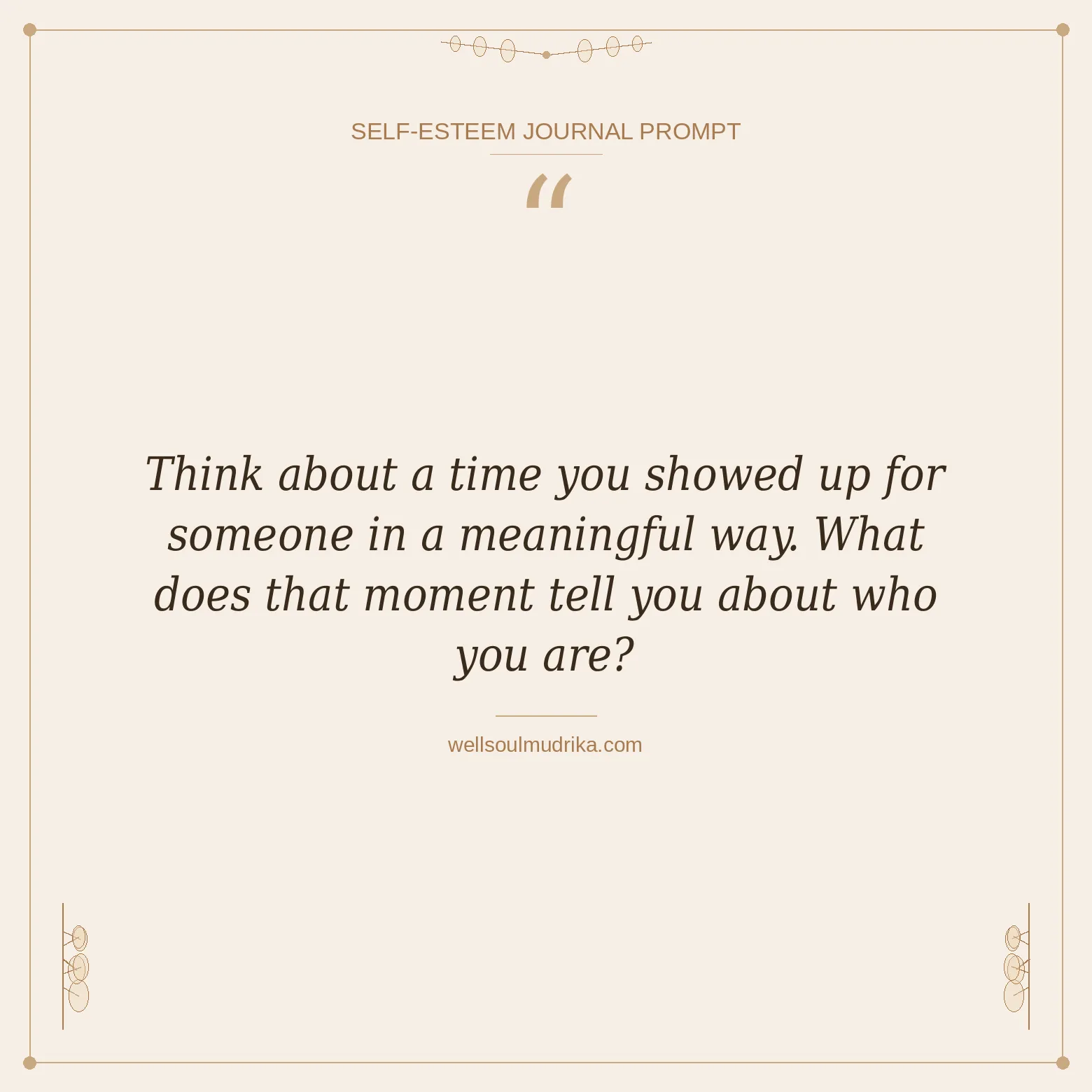
3. Think about a time you showed up for someone in a meaningful way. What does that moment tell you about who you are?
4. Write a list of five things you value in a person. Now look at that list, which of those qualities do you already carry?
5. In what areas of your life have you been making yourself smaller, and what would it feel like to finally take up the space you deserve?
Category 2: Releasing Self-Doubt and the Comparison Trap
These prompts help you untangle from the exhausting habit of measuring your worth against everyone else’s highlights and success.
6. When do you compare yourself most? Who or what triggers it, and what need underneath that comparison is actually asking to be met?
7. What is the story your inner critic tells most often? Write it down, then write a response to it as if you were defending a close friend.
8. Describe a moment when you talked yourself out of something because you didn’t feel ready or good enough. What would you do differently now?
9. What does your self-doubt protect you from? (Sometimes our inner critic has a misguided purpose. What is it trying to keep you safe from?)
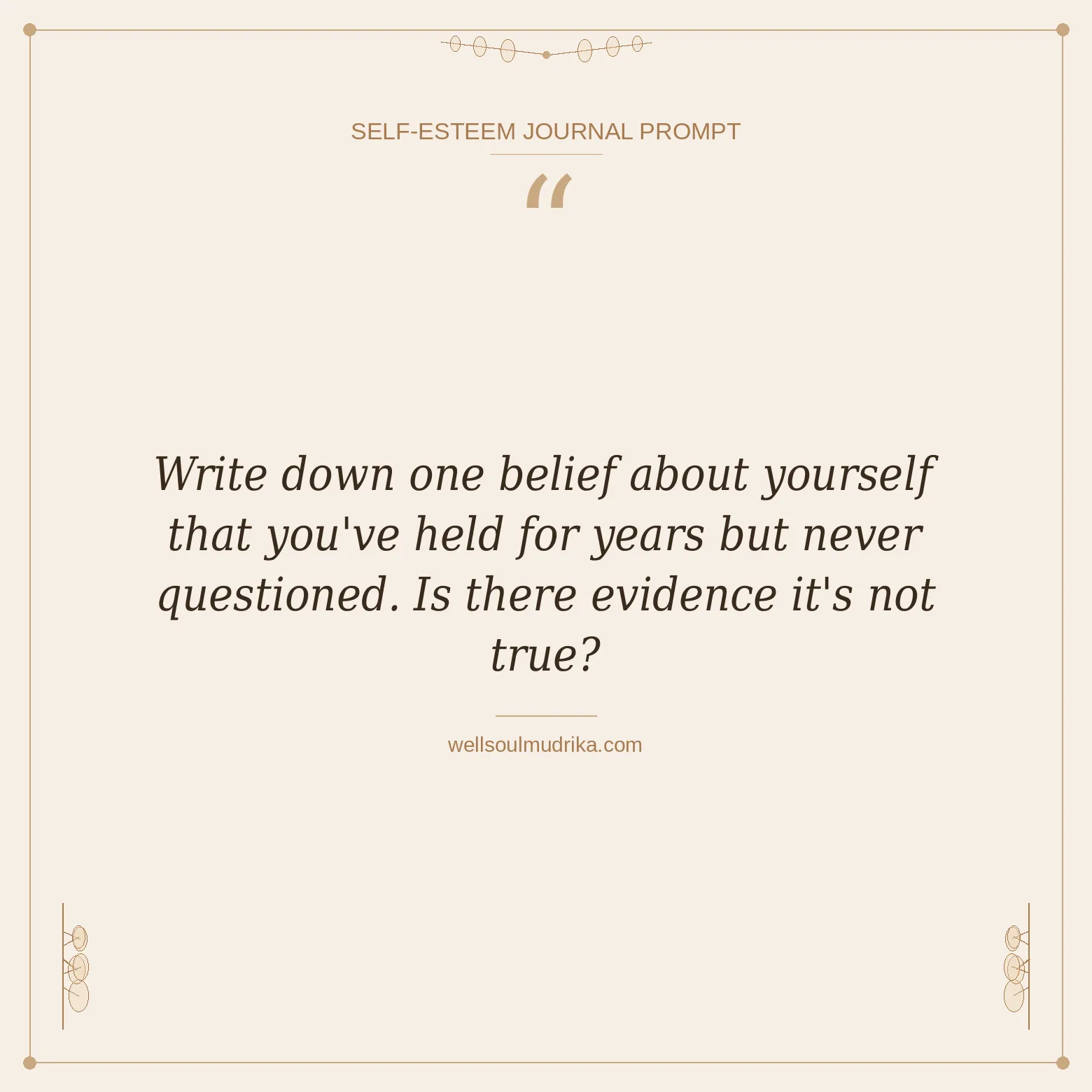
10. Write down one belief about yourself that you’ve held for years but have never actually questioned. Is there evidence that it’s not true?
Category 3: Body Image, Self-Acceptance, and How You See Yourself
Low self-esteem for adults is often woven tightly into how we feel about our bodies and physical selves. These prompts gently open that door.
11. What does your body do for you every day that you take for granted? Write a thank-you note for it as specifically as you can.
12. When did you first start feeling critical about your appearance? What was happening in your life at that time?
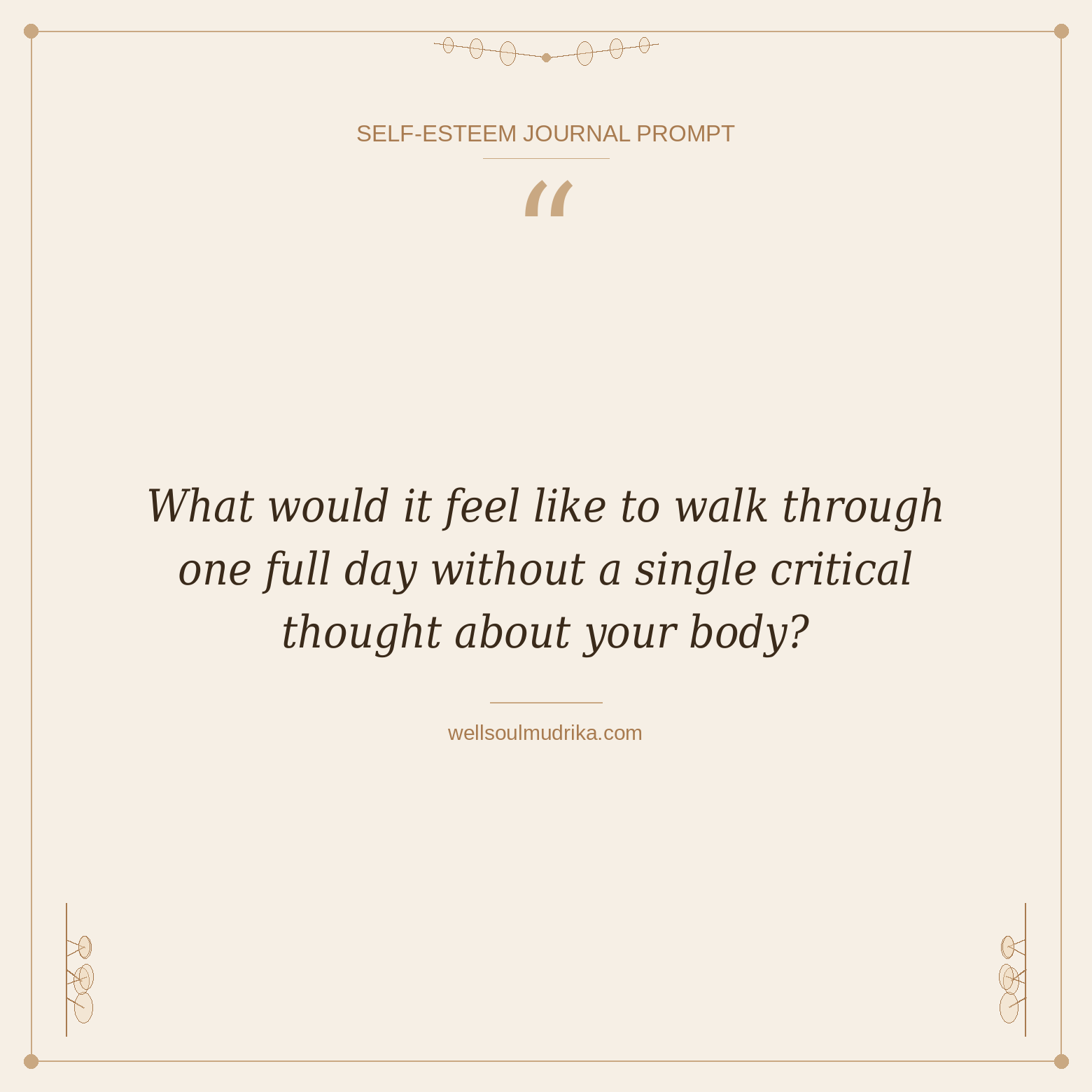
13. What would it feel like to walk through one full day without a single critical thought about your body? What would you notice, do, or feel differently?
14. Write down three things your body has helped you experience that you genuinely loved, the moments where your physical self served your joy.
15. What does accepting yourself actually mean to you, not the Instagram version, but the real, lived, daily version?
Category 4: Journal Prompts for Confidence (Celebrating Strengths and Wins)
Most of us are trained to downplay our achievements. These prompts interrupt that habit and celebrate your wins.
16. List three things you did this month that required courage, big or small. Don’t minimize them.
17. What is something you’ve gotten significantly better at over the last five years? What does that growth say about your capacity?
18. If you could send a message back to yourself ten years ago, what would you want your past self to know about who you’re becoming?
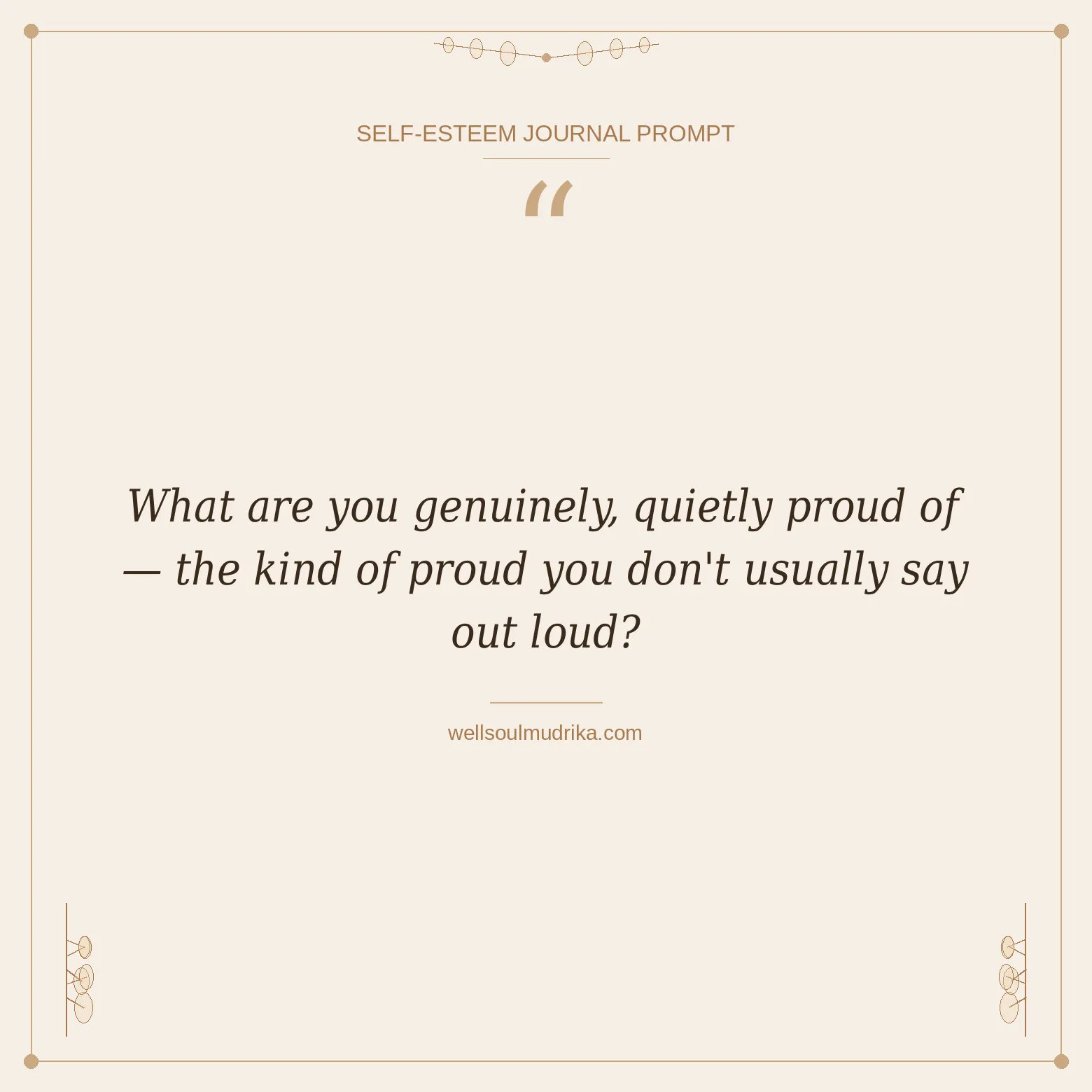
19. What are you genuinely, quietly proud of, the kind of proud you don’t usually say out loud?
20. Describe a challenge you didn’t think you could get through, but did. What inner resource made that possible?
Category 5: Self-Esteem in Relationships and Boundaries
The way we feel about ourselves is deeply shaped and tested in our relationships. These prompts help you reflect on that.
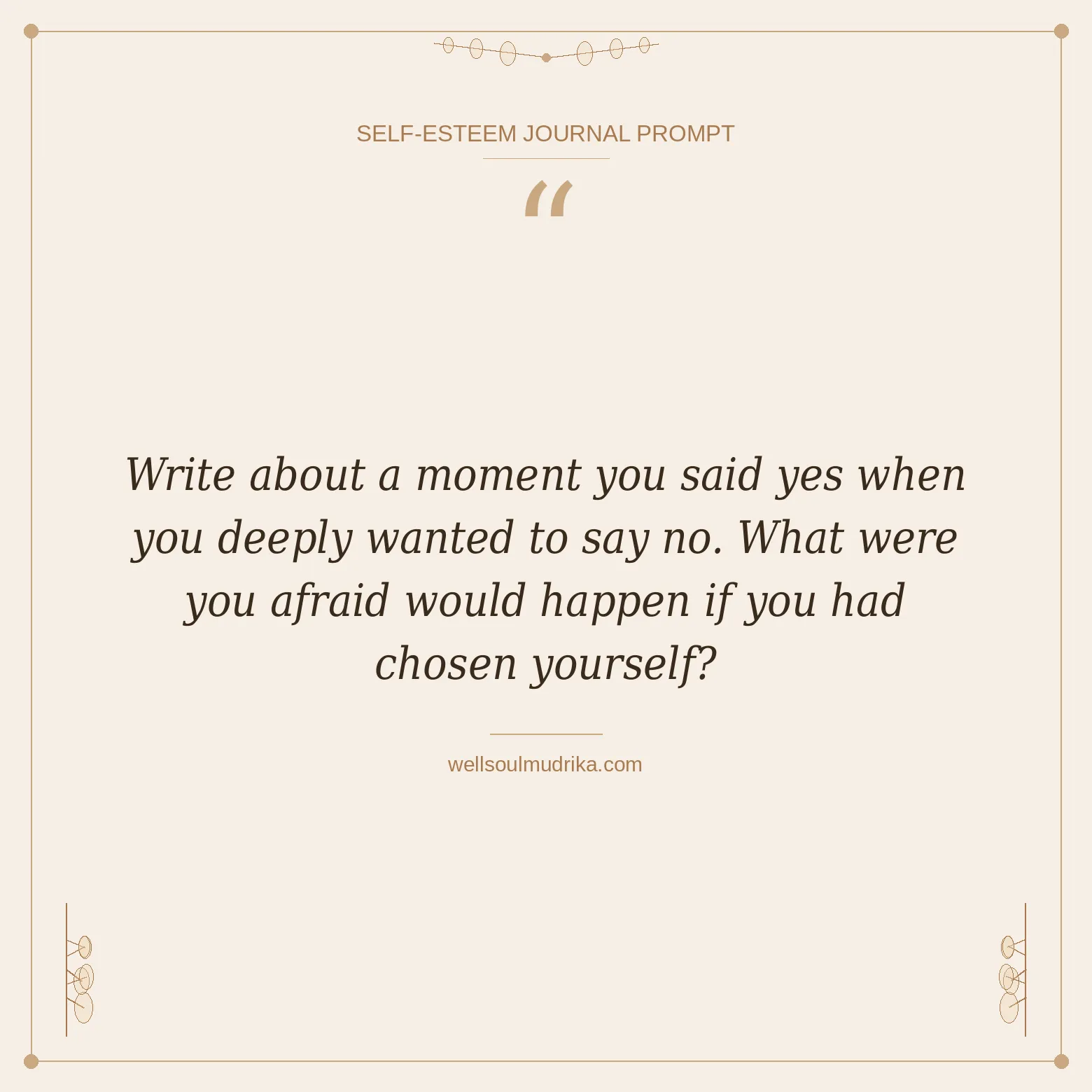
21. Write about a moment you said yes when you deeply wanted to say no. What were you afraid would happen if you had chosen yourself?
22. When you disagree with someone, what happens in your body? Do you speak up, shrink back, or something in between, and why?
23. Think about the boundaries you struggle to hold. What belief about your own worth makes it hard to enforce them?
24. Who in your life makes you feel most like yourself? What is it about that relationship that allows you to show up fully?
25. Is there a relationship in your life (past or present) where you consistently felt smaller than yourself? What did you learn about what you need?
Category 6: Confidence at Work and in Adult Life Roles
These self-esteem journal prompts for adults specifically address the pressures that come with career, identity, and adult responsibilities.
26. What is one professional or personal achievement you’ve brushed off with “it wasn’t a big deal”? Reconsider it. Why was it, actually, a big deal?
27. Are you living by your own definition of success, or someone else’s? What would success feel like if you designed it entirely around your values?
28. What role or identity in your life feels most authentic to who you are? Which one feels most like a performance?
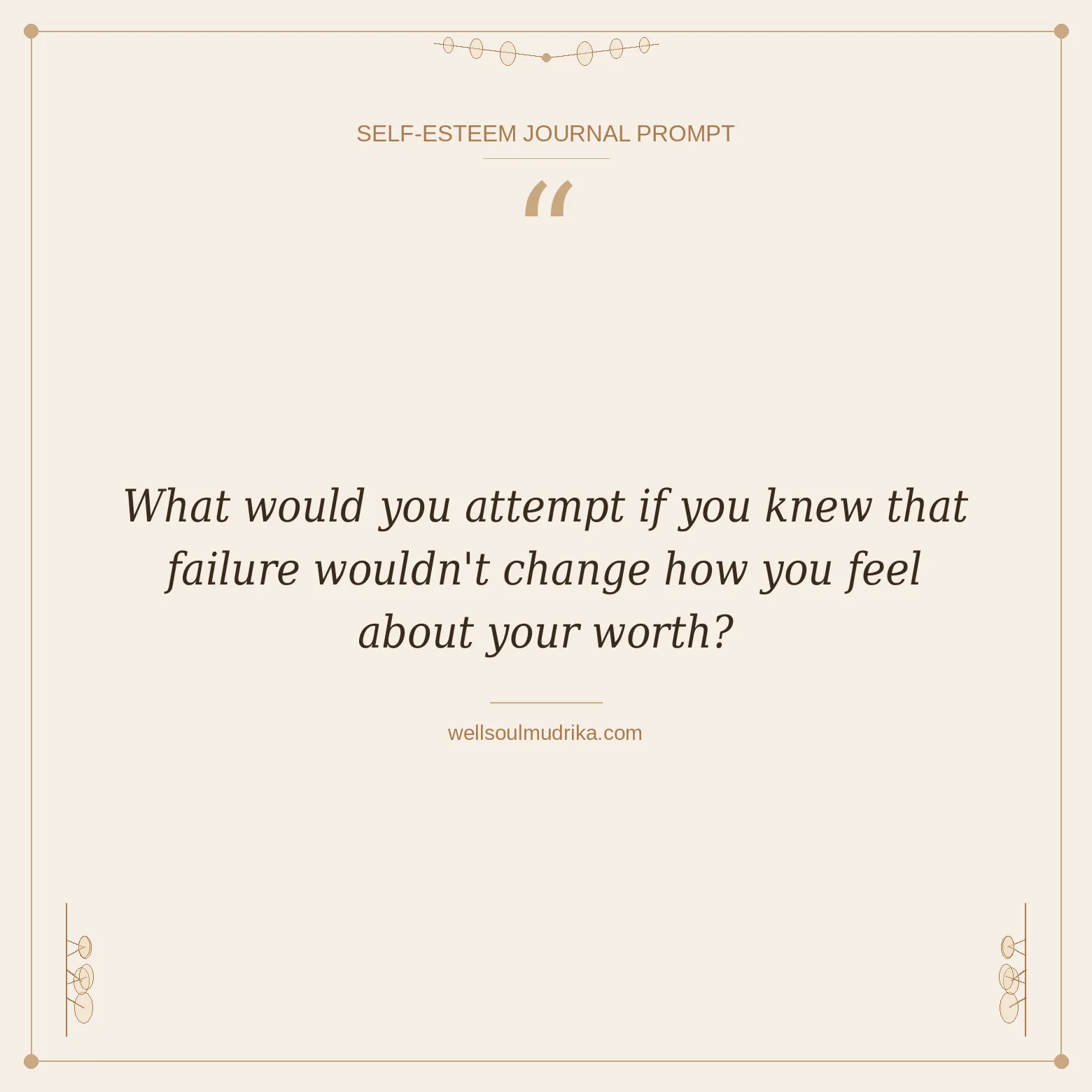
29. What would you attempt if you knew that failure wouldn’t change how you feel about your worth?
30. Write about a time you advocated for yourself, at work, in a relationship, in any setting. How did it feel? What made it hard or easier?
Category 7: Your Future Self and the Confidence You’re Building
End your journaling journey with forward momentum. These prompts connect your current growth to who you’re becoming.
31. What is one small, specific action you could take this week that your most confident self would be proud of?
32. What old version of yourself are you ready to outgrow? What are you willing to let go of to make room for who you’re becoming?
33. Describe the version of yourself who has worked through their self-doubt. What does their daily life look, sound, and feel like?
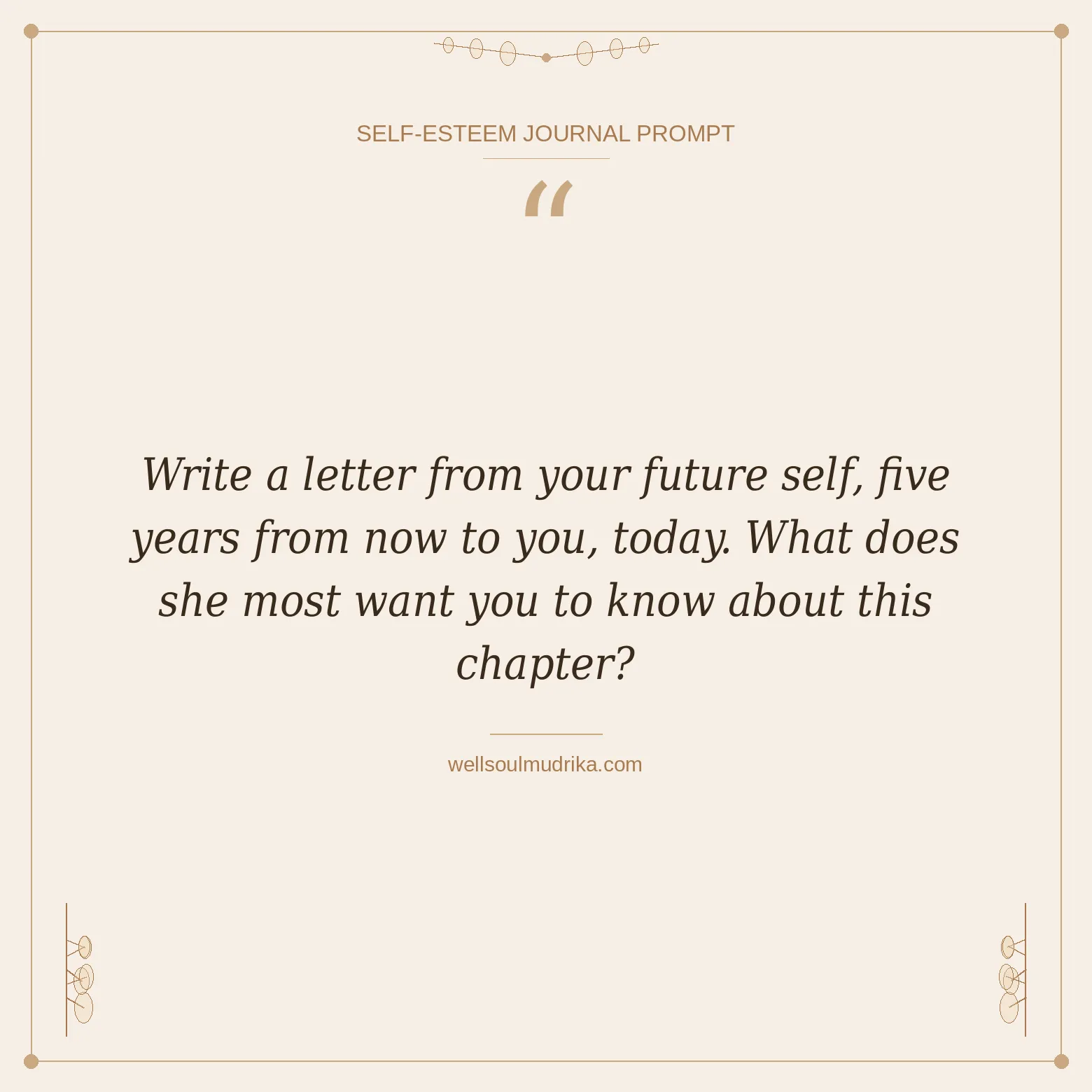
34. Write a letter from your future self, five years from now, to you, today. What does she or he most want you to know about this chapter?
35. How do you want to feel about yourself by the end of this year? Leave what you want to achieve and just think about how you want to feel. Now, write one honest step towards that feeling.
A Few Tips to Make These Self-Esteem Journal Prompts Work Harder for You
- Build a simple routine: You don’t need an hour. Even 10 minutes with one prompt, three times a week, creates a meaningful practice over time.
- Let difficult prompts sit: If a question brings up something big, you don’t have to resolve it in one sitting. Sometimes the most important writing happens slowly, across multiple entries.
- Use your journal as a record, not just a release: When you go back and read what you wrote weeks or months ago, you’ll find evidence of growth you couldn’t see in the moment. That’s a beautiful gift that journaling gives to your self-esteem.
- Pair these with gratitude journaling: Self-esteem grows faster when we’re also noticing what’s good in our lives and in ourselves. If you want daily prompts to support that practice, explore our 365 gratitude journal prompts for a complementary approach.
And if you’re looking to use journaling for bigger life reflection and intention-setting, our new year journal prompts are a beautiful companion to this practice.
Wrap Up: Self-Esteem Journal Prompts For Adults
Low self-esteem isn’t a personality flaw. It’s often the residue of difficult experiences, difficult relationships, and a world that constantly tells us we’re not enough in some way.
But you are enough and more than that, you are capable of changing the story you tell about yourself. These self-esteem journal prompts for adults are a starting point, not a cure-all.
But if you use them honestly and consistently, they become a practice in self-witnessing. One where you finally stop seeking validation from others and start finding it within yourself. And that shift changes everything.
So, start with one prompt, one page, one small moment of choosing yourself over everyone else’s opinion.
Read Next: How To Be More Grateful in Life: 11 Simple Practices That Actually Work
Did any of these prompts spark something for you? Share in the comments, I’d love to know which one hit closest to home.
FAQs About Self-Esteem Journal Prompts
1. How do journal prompts help with self-esteem?
Journal prompts help you slow down and notice negative self-talk. Over time, they build self-awareness and help you replace unhelpful beliefs with more supportive ones. This gradually shifts how you see and talk to yourself.
2. What is the difference between self-esteem and self-confidence?
Self-esteem is your overall sense of worth, how you feel about who you are as a person. Self-confidence is more task or situation-specific. Like how capable you feel in a given area or activity. You can be confident in your work but still struggle with low self-esteem, and vice versa. Both benefit from journaling.
3. How often should I use self-esteem journal prompts?
Consistency matters more than duration. Even 5–10 minutes, three to four times a week, can create meaningful shifts in how you see yourself over time. If you’re new to journaling, start with one prompt per session and let yourself free-write without editing.
4. Can journaling actually improve self-esteem in adults?
Yes. Research shows journaling can improve self-awareness, emotional processing, and overall well-being, the key factors that support healthier self-esteem. For adults, it also helps challenge long-held beliefs about self-worth.
5. How do I start a self-esteem journal?
Start simple: choose one prompt, set aside 10 minutes, and write freely without judging yourself. Focus on honesty, not perfection, and stay consistent. Over time, it becomes easier and more natural to open up on the page.