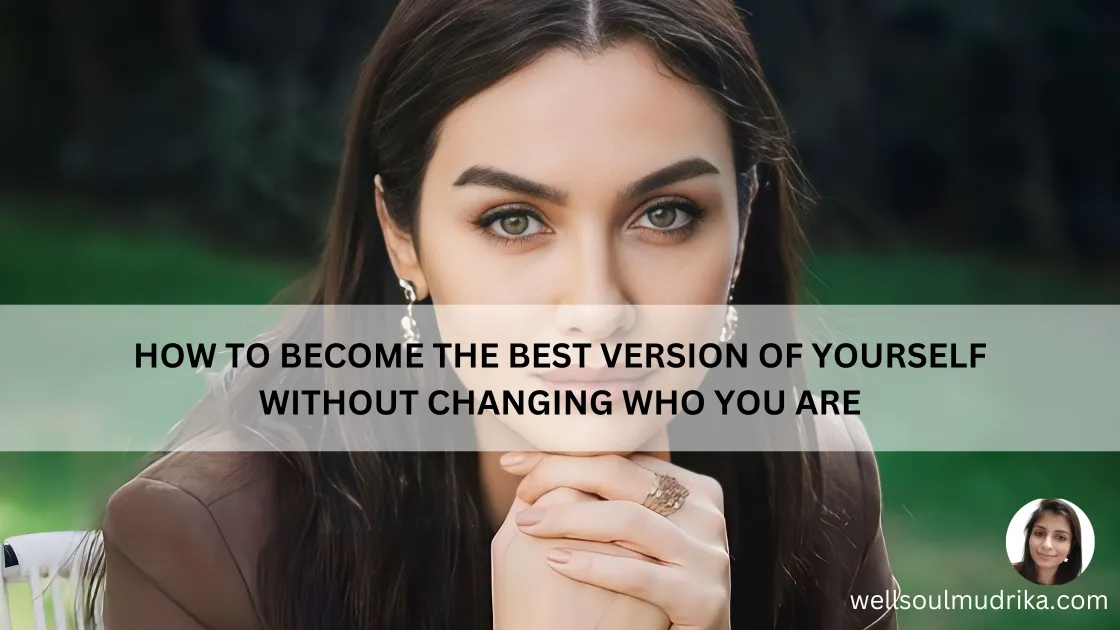
Want to become the best version of yourself without a life revamp? Learn 12 real tips and mindset shifts that actually work, without changing who you are.
You’ve probably come across a self-improvement plan that looked something like this: wake up at 5 AM, journal for 30 minutes, meditate, cold shower, hit the gym, read 20 pages, track your goals. And be grateful for all of it every single day without fail.
And maybe you tried it and lasted a week before real life took over, and the whole thing quietly collapsed. That is why most people burn out before they even get started.
Here’s the thing nobody in the self-help world says loudly enough: Becoming the best version of yourself doesn’t mean becoming a completely different person. It means growing in the direction that actually fits you.
It means closing the gap between who you are right now and who you feel like you could be at your most calm, most alive, most genuinely you.
See how you maintain a garden. You don’t replace the plants, but you give them the right conditions, pull out a few weeds, and let them grow the way they’re meant to. That’s it.
The best version of yourself is not a stranger you haven’t met yet. It’s the same you, just making choices that actually align with what you value.
So, this post walks you through 12 real, actionable ways to become the best version of yourself without losing yourself in the process. Let’s go.
What It Really Means to Become the Best Version of Yourself
Before we get into the how, it’s worth clearing up what this phrase actually means, because most people are chasing the wrong version of it.
Becoming your best self is not about:
- Being more productive than everyone around you
- Fixing all your flaws before you’re allowed to feel at peace
- Achieving a specific look, income, or lifestyle that looks good from the outside
- Constantly optimising yourself like you’re a software update
It is about:
- Living more in line with what actually matters to you
- Building habits that support you instead of draining you
- Knowing yourself well enough to stop running completely on autopilot
- Growing at a sustainable pace without punishing yourself
The best version of you is not some perfect, polished stranger. It’s still you as a better person.
Also Read: Self-Improvement 101: The Ultimate Guide to Start Your Journey in 5 Simple Steps
12 Ways to Become the Best Version of Yourself
So here’s what actually works to become the best version of yourself without becoming someone you don’t recognise.
1. Get clear on what “Your Best Self” actually looks like
The first thing you need to do is to figure out what your best self means to you. You can’t grow toward something you haven’t defined, right?
Most people have a vague sense of wanting to be better, but no real picture of what that means for them specifically. And when the destination is foggy, any path looks fine, which means you end up walking in circles.
So, take 10 minutes to reconnect with yourself and actually write this down:
- What does your best self look like on a regular Tuesday? (It need not be a dream vacation or at peak motivation, just a regular day).
- How do you feel when you wake up?
- How do you handle a frustrating conversation?
- What do you spend your evenings doing?
- What kind of energy do you bring to the people around you?

Getting specific here is everything. Your best self isn’t a mood board of someone else’s life. It’s a clearer, calmer, more intentional version of you. Once you know what you’re aiming for, every small decision becomes easier because you have a filter.
Quick Tip: Write one sentence that starts with: “At my best, I am someone who…” and keep it somewhere you’ll see it. This has helped me figure out my best self, and I am sure it will work for you, too.
2. Build micro habits that feel almost embarrassing
One of the biggest mistakes people make is trying to change too many things at once. They want to eat better, exercise more, read daily, and meditate, all starting Monday. By Wednesday, the whole plan is dead because it doesn’t work that way.
The Stanford research consistently shows that small, specific habits stick far better than big, ambitious ones. And no, they are not easier, but because they are easier to stay consistent with, especially on your worst days.
The goal is to build an identity that stays. When you do a small thing consistently, you start to see yourself as someone who does that thing, like a person who journals every day or a person who moves their body.
That identity shift is what makes a bigger change possible over time to become the best version of yourself.
Quick Tip: Pick one habit and make it so small it feels almost silly. Want to journal? Write one sentence. Want to exercise? Put your shoes on and stand outside. Start there, genuinely.
3. Protect your sleep like it’s your most important meeting
This one sounds basic, but it might be the highest-leverage thing on this entire list. See, sleep is not just rest. It’s when your brain consolidates memories, regulates your emotions, repairs your body, and restores the self-control you need to make good choices the next day.
And, poor sleep quality directly impacts emotional regulation, decision-making, and even your ability to show empathy toward others. When you’re running on five or six hours, the version of you that shows up is irritable, reactive, and more likely to reach for whatever feels easy.

It can be anything like junk food, doom-scrolling, or avoiding a hard conversation you need to have. So, you need to fix your sleep. And for that, you don’t need a complicated sleep routine. You mostly just need to take bedtime seriously as I do now. Trust me, it works like magic for all other aspects of your life.
Sleep at the same time every night, even on weekends. Keep the phone out of the bedroom, or at least face down. And, have a wind-down night routine that signals your body it’s sleep time.
Quick Tip: Set a “go to bed” alarm, not just a wake-up alarm. When it goes off, start wrapping up whatever you are doing and prepare to wind down. Make it non-negotiable.
4. Set boundaries without feeling like you’re being selfish
If you’re someone who finds it hard to say no, who regularly agrees to things that drain you, who feels responsible for managing other people’s feelings, this one is for you.
Setting boundaries sounds simple in theory, but it feels incredibly complicated in practice, especially if you were raised to put everyone else first. Lack of boundaries actually costs you your energy, your time, your peace, and ultimately your ability to show up well for anyone, including yourself.
See, boundaries are not walls, rudeness, or selfishness. They are simply an honest communication of what you need in order to show up as a whole, functioning person.
People who consistently say yes to everything and everyone end up resentful, exhausted, and disconnected from their own wants. That’s not the best version of anyone.
The tricky part is that boundaries often feel selfish at first because they’re new, and the people around you might push back. But discomfort at the start doesn’t mean you are wrong.
Quick Tip: Identify one thing you keep agreeing to that drains you. Practice saying “I can’t make that work right now” without explaining or apologizing. Do it just once and see how it feels.
5. Move your body in a way you actually enjoy
Exercise doesn’t have to mean a gym membership, equipment, or a structured program. It just has to mean movement you do regularly enough that your body and mind actually benefit from it.
Regular movement reduces anxiety and depression, improves focus, boosts energy, and helps you sleep better. It also builds a quiet sense of capability that carries over into everything else you do. I experienced this after doing yoga and even more after starting my strength training journey.
The reason most people give up on exercise is that they pick something they hate. If you dread the gym, you’re not going to go consistently, no matter how motivated you feel in January.
But a 20-minute walk every evening after dinner or a dance class that doesn’t feel like exercise? You can even do swimming, cycling, yoga, or a sport you used to play. Those are sustainable, right?
So, find the thing that doesn’t feel like punishment because that’s the thing you’ll keep doing.
Quick Tip: Think of one physical activity you’ve genuinely enjoyed at any point in your life. Look up how you can do it this week, even for 20 minutes.
6. Learn to sit with your emotions instead of avoiding them
A huge part of becoming the best version of yourself is building emotional intelligence, and the first step to that is simply noticing what you’re feeling without immediately trying to fix it, distract from it, or explain it away.
Most of us are expert emotion-avoiders. We scroll when we’re anxious or try to stay busy when we’re sad. We even joke when things get heavy. And while none of that is terrible, it does mean we never actually process what’s going on inside.

But emotions that aren’t felt tend to show up later, louder. See, emotional intelligence isn’t about being calm all the time. It’s about knowing what you’re feeling and why, so you can respond instead of just react.
People with high emotional intelligence handle conflict better, make better decisions, and tend to have healthier relationships, not because they don’t feel hard things, but because they don’t let their feelings run the show.
Quick Tip: Once a day, pause and ask yourself: “What am I actually feeling right now?” Name it. You don’t have to do anything with it. Just naming an emotion reduces its intensity, and that’s a good start.
7. Audit who and what you’re feeding your mind daily
You become, over time, a reflection of what you repeatedly expose yourself to. The content you consume, the conversations you have, and the people you spend the most time with. So, it becomes important to be honest with yourself about what’s actually nourishing you and what’s quietly draining you.
- Does your social media feed mostly leave you feeling inspired or inadequate?
- Do the people you spend the most time with make you feel like your best self or your most insecure self?
- Does the content you consume at night help you wind down or keep your nervous system buzzing?
All this is worth paying attention to and changing accordingly. You have more control over your mental diet than you realize. Mute accounts that leave you feeling lacking. Choose people who make you feel seen. The inputs you surround yourself with every day shape how fast you become the best version of yourself.
Quick Tip: Spend five minutes today looking at what you’ve consumed in the last 24 hours: content, conversations, media. Notice how each one made you feel; that noticing alone starts to shift what you reach for.
8. Practice honest self-reflection
There’s a difference between reflecting on yourself and self-criticism. One helps you grow while the other just makes you feel bad. True self-reflection is the practice of looking at your own patterns, choices, and behaviors with curiosity instead of judgment.
Journaling is one of the most well-researched tools for this. It helps you see your own patterns clearly, process emotions, and track your growth over time. But it doesn’t have to be long or formal.
Even five minutes of honest writing a few times a week, just answering one question, can shift things meaningfully. The goal is to understand yourself well enough that you stop repeating the same cycles without realizing it.
Quick Tip: At the end of the day, ask yourself two questions: What went well today? And what would I do differently? Keep it short but kind.
Related Read: 35 Powerful Self-Esteem Journal Prompts for Adults to Boost Confidence
9. Be a lifetime learner
You know, curiosity is one of the most underrated qualities in a person. People who stay curious, who keep learning new things, asking questions, exploring ideas outside their usual lane, tend to be more adaptable, more interesting to be around, and more resilient when life throws curveballs.
Learning new things also keeps your brain sharp and gives you a sense of progress even during periods when the bigger areas of your life feel stuck.

This doesn’t mean you need to do something big. It could be as simple as listening to a podcast on your commute about something you know nothing about. Reading one long article a week on a topic you’re curious about. Or asking someone you admire how they got to where they are.
Quick Tip: Pick one topic you’ve been vaguely curious about but never explored. Find one podcast episode, video, or article about it and consume it this week.
10. Stop measuring yourself against everyone else
Comparison is one of the quietest, most consistent drains on genuine growth. You see someone’s career highlight on LinkedIn, and your own work feels suddenly small.
You scroll through someone’s seemingly effortless life and feel inadequate in your own. You hear about someone your age who seems to have figured everything out and wonder what you’ve been doing wrong.
See, when you compare, you’re seeing their visible output, not their full process. You’re seeing the results of years of effort you didn’t witness.
Comparing your inside experience to someone else’s outside presentation is, by design, always going to make you feel like you’re losing a race you didn’t enter.
The only comparison that genuinely serves your growth is the one you make with your past self.
Are you slightly more patient than you were six months ago or a little clearer on what you want? That’s real progress, which won’t trend on Instagram, but it’s the kind of improvement that actually changes your life.
Quick Tip: Next time you catch a comparison thought creeping in, redirect it. Ask yourself: “What’s one thing I’m genuinely better at compared to a year ago?” It can be tiny too, as the point is to practise measuring yourself against yourself.
Also Read: How To Stop Seeking Validation From Others? 11 Tips To Live Your Best Life
11. Give back in whatever way feels natural to you
This one might surprise you on a list about becoming your best self, but contribution is one of the core human needs that makes people feel genuinely fulfilled. When you focus entirely inward on your own growth and goals, there’s a ceiling to how good that feels.
But when you add a dimension of giving, whether it’s time, attention, skill, or just kindness, it feels magical. You feel more connected, more purposeful, and surprisingly, more motivated to keep working on yourself.

Giving back is not like volunteering every weekend or donating money you don’t have. It can be as simple as being a good listener for a friend who’s struggling or sharing something you know that could genuinely help someone.
Even showing up consistently for the people who matter to you counts. The point is to get out of your own head regularly and remember that growth has a ripple effect.
Quick Tip: Think of one person in your life who could use some support right now. Reach out without waiting for them to ask, as sometimes just showing up is the whole thing.
12. Acknowledge your progress and give yourself actual credit
The last one on the list to become the best version of yourself is to give yourself credit. Most people are much better at noticing what they haven’t done than what they have.
You go to bed, and your brain replays the email you forgot to send, the workout you skipped, the thing you said that came out wrong. But you completely miss over the boundary you held, the kind thing you did, the hard conversation you had anyway.
This isn’t just about feeling good. Celebrating small wins is actually a psychological tool that reinforces the behaviors you want to repeat.
When your brain registers that a positive action was followed by a feeling of satisfaction, it’s more likely to seek out that action again. You’re literally rewiring yourself toward better habits by acknowledging them.
Quick Tip: Before you sleep tonight, name one thing you did today that your best self would be proud of. Even something small.
Signs You’re Actually Growing (Even When It Doesn’t Feel Like It)
Growth is almost always quieter than you expect it to be. It feels like a slow, subtle shift that you might not notice until you look back. You’re growing:
- When things that used to completely break you now just slow you down.
- When you catch yourself in a familiar pattern and choose something different.
- When you set a boundary without spending three days wondering if you were too harsh.
- When you ask for help, it doesn’t feel like admitting defeat.
- When you choose rest without immediately calling it laziness.
- When you apologise more quickly and more genuinely than you used to.
These are all real changes to becoming your best self. They don’t disappear after a month because that’s not coming from a programme or a challenge. Rather, it’s coming from a slow, genuine shift in who you’re becoming.
Wrap Up: Become the Best Version of Yourself
If you’ve read through all of the “How to Become the Best Version of Yourself ” guide and you’re feeling slightly overwhelmed, that’s completely understandable and also a good sign. This means you actually want to change, and you care about doing it properly.
See, you don’t have to become someone unrecognisable. You just have to become a little more like the person you already feel yourself capable of being. That’s everything.
Here’s the simplest possible advice: Read back through the list and find the one point that made you think “I genuinely need that.” Start there in the smallest possible way and then continue it tomorrow and the day after. That’s how people actually change and become their best versions.
Your Next Read: 19 Underrated Self-Improvement Tips to Become a Better Version of Yourself
FAQs: How to Become the Best Version of Yourself
1. Can I grow as a person without losing the things I like about myself?
Yes, and this is actually the most sustainable kind of growth. When you build on your existing values and personality rather than trying to overwrite them, change feels natural instead of forced. The goal isn’t to become someone unrecognisable but to become a more intentional version of the person you already are.
2. Why do I keep starting self-improvement plans and abandoning them?
Usually, for one of two reasons: the plan is too big and overwhelming to maintain, or it doesn’t actually align with what you genuinely value. When the goal belongs to you, showing up for it feels different. When the steps are small enough to do on your worst day, consistency becomes possible. Most plans fail on both counts.
3. Can I become my best self without a strict routine?
Yes. Routines help, but they’re not the only way. What matters more is intention, even loose, flexible intention. Knowing roughly what you want more of and making small choices that point in that direction adds up, even without a rigid schedule.
4. What actually matters most for long-term personal growth?
Self-awareness. Before any habit, goal, or routine, the thing that changes everything is genuinely knowing yourself: what you value, what you avoid, what your patterns are, and why. Everything else you build is only as strong as that foundation.
5. How long does it take to become a better version of yourself?
There’s no fixed timeline, and anyone who tells you otherwise is selling something. Small habits can shift your mindset within weeks. Bigger changes in how you think and respond to the world take longer. The more useful question is: are you a little better than you were last month?